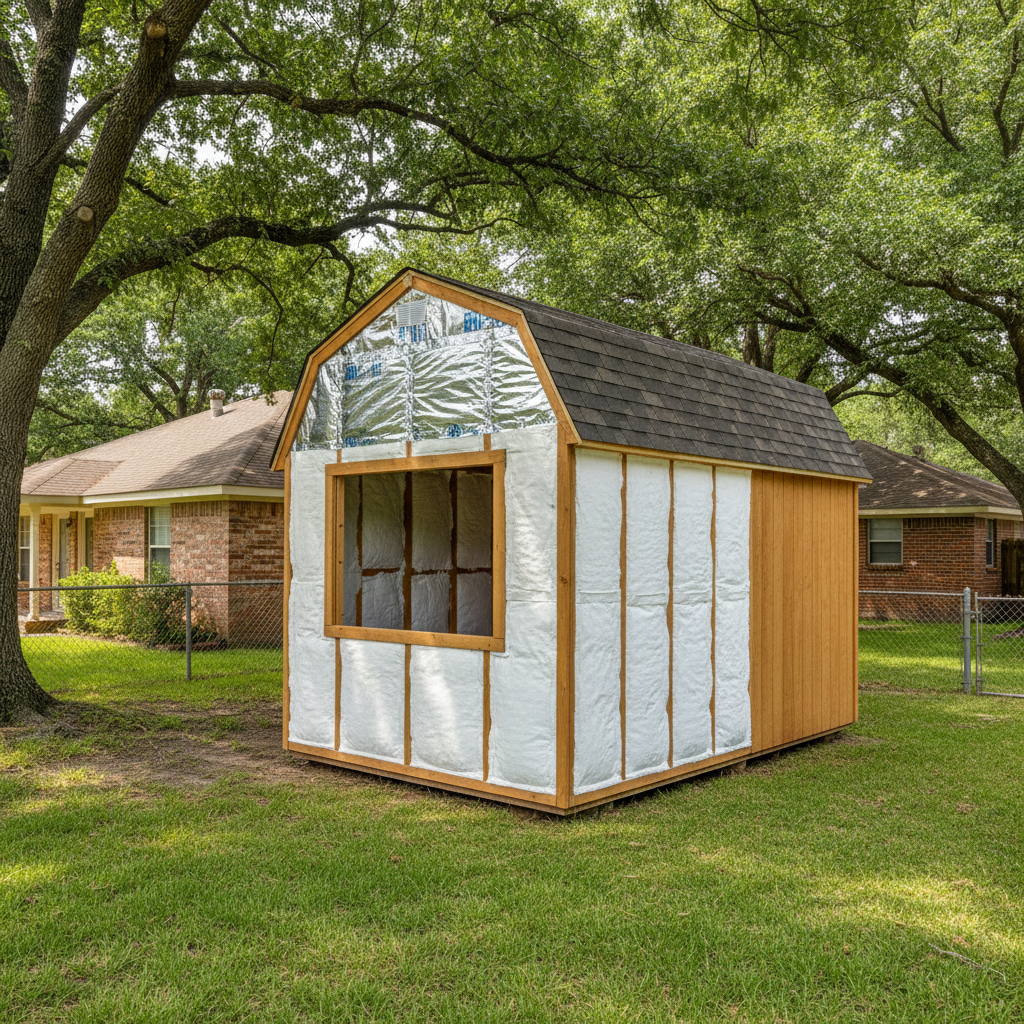
Stepping into a backyard shed in July in DeSoto, TX often feels like walking straight into an oven. Residents living around neighborhoods like Meadowbrook or near Lancaster-Hutchins Road already know how brutal North Texas summers can get on any outdoor structure. A metal or wooden box in a backyard easily climbs past 120 degrees when the August sun beats down.
Most property owners build or buy a shed to store lawnmowers and holiday decorations. However, Omega Insulation sees a massive shift in DeSoto. Homeowners are turning these outdoor buildings into home offices, backyard workshops, art studios, and quiet hobby rooms. The catch is that people cannot spend ten minutes out there without melting unless they deal with the thermal envelope.
Property owners need to know what goes into getting an outbuilding ready for year-round use.
Why Standard Sheds Turn Into Sweatboxes Here
Standard storage sheds come with zero thermal protection. They are built for basic shelter against rain, not for temperature regulation. When intense triple-digit summer peaks combine with the fluctuating humidity rolling off the prairies, the space roasts in July and freezes when a sudden January ice snap hits.
Omega Insulation talks to homeowners all the time who tried throwing a cheap window unit into an uninsulated shed. They watch their electric bill spike while the room stays miserable. The heat radiates straight through the thin walls and the roof decking. Without stopping that transfer, cooling equipment does not stand a chance.
Choosing the Right Material for Outbuildings
Property owners have a few ways to tackle this, but the solution must match the structure. Prefabricated metal sheds present a unique challenge because they conduct heat aggressively and sweat when the dew point shifts. Wooden T1-11 or framed sheds give builders more breathing room to work with standard cavity depths.
For maximum performance in a small footprint, spray foam is the heavy hitter Omega Insulation recommends. It seals every crack, adds structural rigidity to the framing, and blocks radiant heat transfer better than almost anything else available. When working on a tighter budget with a traditional wood-framed outbuilding, high-density batts can do the job if installers include an adequate vapor barrier to fight off moisture.
Ventilation Matters Just as Much
A common mistake involves insulating every square inch of a shed, sealing it up tight, and forgetting about airflow. Texas weather swings hard, and trapped humidity will rot wooden framing or rust metal fasteners.
Buildings need a balanced system. Ridge vents, soffit intake, or a small gable fan paired with new insulation keeps the air fresh and stops condensation from pooling against the walls. Balance is key to a long-lasting outbuilding.
Property owners tired of treating a backyard building like a sauna can make it usable twelve months out of the year with proper upgrades. Getting the thermal layers right the first time saves money and keeps gear safe from extreme weather swings.